
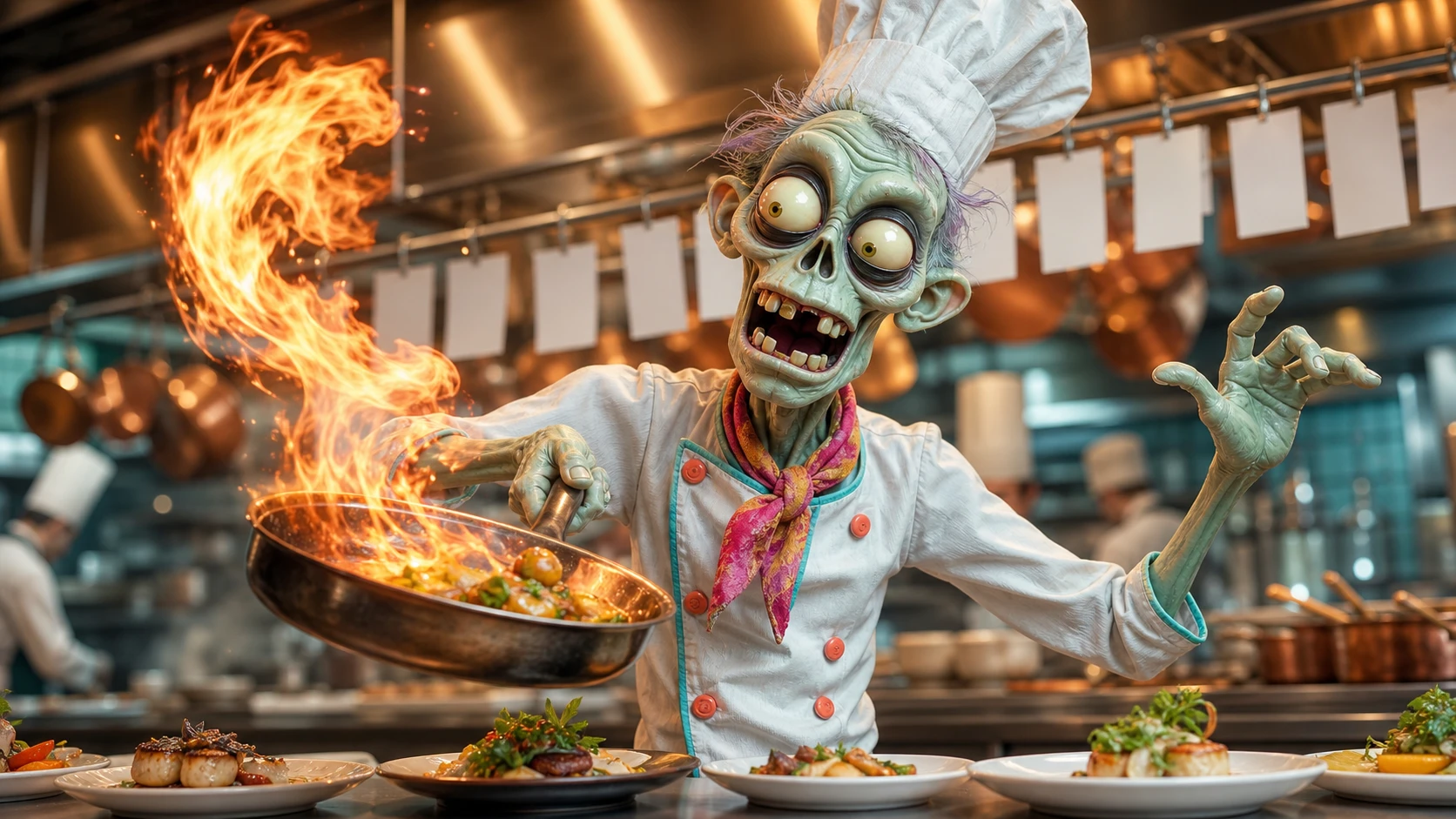
AI Integration For Cincinnati Restaurants
Owner or general manager of an independent restaurant, likely doubling as the host, the reservation line, and the social media manager. If that sounds familiar, the fix isn’t hiring another person to sit by the phone. It’s an AI system built into your site that never misses the call in the first place.
Why This Matters More In Cincinnati Than It Looks
Ohio's state-set tipped minimum wage of $5.50/hour is more than double the federal tipped floor, making Cincinnati front-of-house labor structurally more expensive than in most states — while Hamilton County alone generated $4.4 billion in visitor spending, with visitors now accounting for a quarter of local business revenue.
- Ohio's standard minimum wage rose to $11.00/hour effective January 1, 2026, with a state-set tipped minimum wage of $5.50/hour — well above the federal tipped floor of $2.13/hour.
- The Ohio rate applies to employers with gross receipts above $405,000/year; smaller employers remain tied to the $7.25 federal minimum.
- Hamilton County (Cincinnati) tourism generated an estimated $4.4 billion in visitor spending, per a Tourism Economics study commissioned by Visit Cincy; including Northern Kentucky, the regional impact rises to $6.5 billion.
- The Cincy Region (Hamilton County plus Northern Kentucky) drew roughly 25.9 million visitors in a recent reporting year, per VisitCincy's tourism counts.
- Visitors accounted for 25% of all local business revenue in the county, an 8% increase over the prior year.
- More than 46,000 people are employed in tourism in Hamilton County, with visitor spending contributing $229 million in local taxes.
What Ohio Actually Requires
Cincinnati restaurants get at least one unannounced inspection a year from the city health department (or Hamilton County outside city limits), Ohio requires a certified Person-in-Charge on every shift with full Manager certification for higher-risk kitchens, and liquor permits are capped by a statewide population formula administered by the Ohio Division of Liquor Control.
- The Cincinnati Health Department licenses and inspects food establishments within city limits under the Ohio Uniform Food Safety Code, with at least one unannounced onsite inspection per year; results are public via the city's online inspection database. Hamilton County Public Health covers roughly 1,400 additional retail food establishments outside city limits on a hazard-risk-based schedule.
- Ohio requires a Person-in-Charge (PIC) certification for someone on every shift at all risk levels (I-IV), while full Manager Certification in Food Protection is specifically required for at least one staff member at Risk Level III and IV establishments -- most full-service restaurants fall into these higher tiers.
- Ohio's D-5 liquor permit (beer, wine, and spirits for on-premise consumption) is capped under Ohio Revised Code 4303.29 at one D-3/D-4/D-5 permit per 2,000 population in a municipality or township, though cities of 55,000+ get a looser 1-per-1,500 ratio for D-3 permits specifically.
- Large-format restaurants can bypass the quota via a D-5i permit if they have at least 4,000 sq ft of floor space and 140 indoor seats offering full-course meals -- these are not subject to the municipal population cap.
What’s Actually Costing You Right Now
What We Build
Ad Zombies is a branding and marketing company founded by Ken “Spanky” Moskowitz — 40 years in advertising, 10 Super Bowl ads, $460 billion in client revenue generated. Web Reanimation is our website rebuild service; AI integration is one of the ways we build it to keep working after the site launches, not just look good on launch day.
How Much Does This Cost?
AI integration isn’t a separate line item bolted onto a website quote. Web Reanimation projects start at $10,000, and AI chat, booking, and automation are scoped into that same fixed-price proposal based on what your business actually needs. You get one proposal, not a website quote and a separate AI vendor quote to reconcile.
How It Works
AI Integration In Nearby Markets
The local pressure that makes this worth building looks different in every market. Others we build for:
Want the full website picture for Cincinnati first? See Restaurant website design in Cincinnati. Not in Cincinnati, or not in restaurant? See AI integration for restaurants for our other markets, or every industry we build for.
Frequently Asked Questions
Part of it. AI chat, AI-powered booking, and marketing automation are capabilities we build into your Web Reanimation site -- not a second contract, a second price, or a second vendor to coordinate. Web Reanimation projects start at $10,000, and AI integration is scoped into that same fixed-price proposal.
Fair question. What makes AI integration worth building at all is local: Ohio's state-set tipped minimum wage of $5.50/hour is more than double the federal tipped floor, making Cincinnati front-of-house labor structurally more expensive than in most states — while Hamilton County alone generated $4.4 billion in visitor spending, with visitors now accounting for a quarter of local business revenue. That's the real pressure an AI assistant or automated booking flow is built to relieve here, not a generic feature list.
You own the build -- the code, the content, the domain, and access to your CMS. The AI assistant itself runs on usage-based provider costs (the same way any AI tool works), but there is no markup, no "hostage fee," and no platform lock-in on our end.
Most Web Reanimation projects, AI integration included, take 6 to 12 weeks from kickoff to launch. We accept a maximum of 5 Web Reanimation projects per month across every industry we work with, so timelines are real, not padded.