
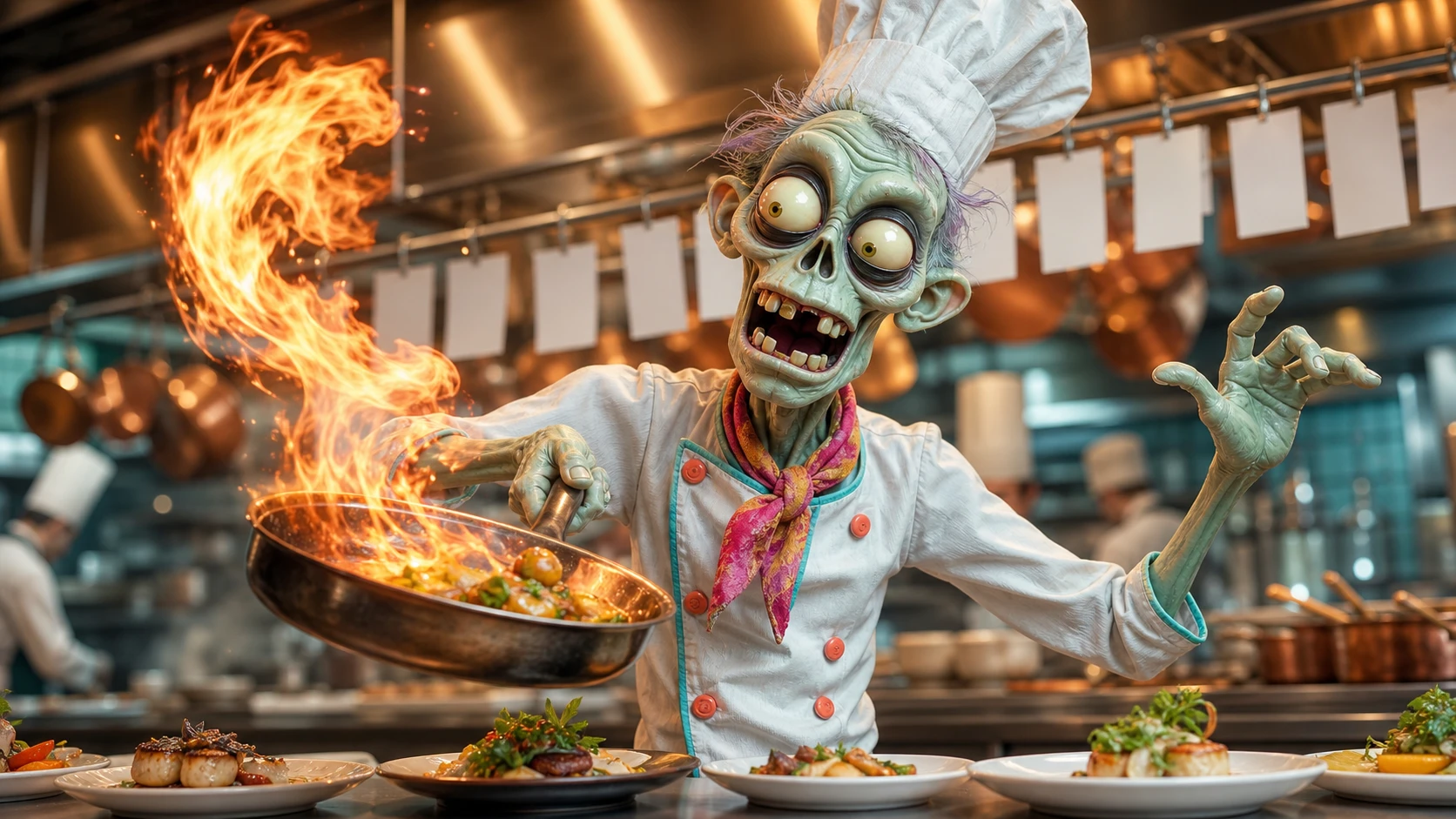
Restaurant Website Design For Miami, Florida
Florida's tipped cash wage is on a scheduled climb (to $11.98/hr by September 30, 2026, as the state minimum reaches $15.00) while its $3.02 tip credit stays frozen — meaning tipped-labor cost keeps rising every year regardless of tips — and Miami-Dade drew 28.3 million visitors generating $32.2 billion in economic impact in 2025, a volume of demand that makes reservation and review-response overhead a real operational load.
You’ve probably seen the generic version of this page before — the one that says “serving Miami and the surrounding area” a dozen times and calls it local. That’s not what this is. Ad Zombies builds websites for restaurants built around how Miami’s market actually works, not a template with the city name dropped in.
Why Miami Is Different For Restaurants
Florida's tipped cash wage is on a scheduled climb (to $11.98/hr by September 30, 2026, as the state minimum reaches $15.00) while its $3.02 tip credit stays frozen — meaning tipped-labor cost keeps rising every year regardless of tips — and Miami-Dade drew 28.3 million visitors generating $32.2 billion in economic impact in 2025, a volume of demand that makes reservation and review-response overhead a real operational load.
- Florida's minimum wage is $14.00/hour through September 29, 2026, stepping to $15.00/hour on September 30, 2026, the final step of the state's 2020 constitutional minimum-wage amendment.
- The tipped cash wage is the state minimum minus a fixed $3.02 tip credit — currently $10.98/hour, rising to $11.98/hour when the state minimum hits $15.00 — and the credit itself does not grow, so the cash wage restaurants must pay servers keeps climbing every scheduled increase.
- Miami-Dade welcomed 28.3 million visitors in 2025, generating $32.2 billion in total economic impact and more than $5.3 billion in combined tax revenue, per the Greater Miami Convention & Visitors Bureau.
- International visitors to Greater Miami spent more than $1,150 per person per trip on average, with strong performance specifically in dining alongside lodging and retail.
- The 2026 MICHELIN Guide recognized a lineup of Greater Miami and Miami Beach restaurants, and GMCVB's 2026 outlook cites a robust pipeline of sporting events, cultural programming, and conventions expected to further raise visitor volume.
Built Around Florida’s Rules, Not Guesswork
Florida restaurants are licensed and inspected by the state's Division of Hotels and Restaurants (not county health departments) on a risk-based 1-4-visits-per-year schedule, a certified food protection manager is required within 30 days of hire, and full liquor service runs through a county-population-based quota system with a food-revenue-based special exception restaurants can use instead.
- The Division of Hotels and Restaurants (DBPR), not the county health department, licenses and inspects public food service establishments statewide under Chapter 509, Florida Statutes.
- Florida uses a risk-based inspection system: establishments receive 1 to 4 unannounced inspections per year depending on food-handling risk level (from temporary/no-raw-animal-food operations up to establishments linked to confirmed foodborne illness).
- Under Rule 64E-11.012, Florida Administrative Code, all individuals in managerial food-safety positions must obtain Certified Food Protection Manager certification within 30 days of being hired; establishments with 4+ employees must have a certified manager present at all times, though 3-or-fewer-employee operations are exempt from that presence requirement.
- Florida quota liquor licenses are capped at roughly one new license per 7,500 residents added to a county's population, making full liquor licenses scarce and valuable in dense counties.
- Restaurants that don't hold a scarce quota license can instead qualify for a Special Restaurant License (SRX), which permits beer/wine/liquor service on-premises but requires at least 51% of gross revenue to come from food and non-alcoholic beverage sales.
What We Build For Miami Restaurants
Ad Zombies is a branding and marketing company founded by Ken “Spanky” Moskowitz — 40 years in advertising, 10 Super Bowl ads, $460 billion in client revenue generated. Web Reanimation is our website rebuild service: fast, fully owned, built for a dining room that doesn’t have time to wait on a slow site.
How Much Does A Restaurant Website Cost In Miami?
That’s one of the first things every owner wants to know, and we’re not going to dodge it. Web Reanimation projects start at $10,000. Final investment depends on your menu, whether you want reservations and online ordering built in, and how much content we’re building. You get a fixed-price proposal after a free assessment — not a vague “it depends” and a follow-up call three weeks later.
How It Works
Restaurant Website Design In Nearby Markets
Every market sells differently. Other markets we build for:
Want AI chat and automated reservations built in? See AI integration for restaurants in Miami. Not in Miami? See restaurant website design for our other markets, our full services, or every industry we build for.
Frequently Asked Questions
Fair question — most "location pages" are exactly that. Ad Zombies works with restaurants remotely, wherever they are, so we're not claiming a Miami office we don't have. What we do build is a site scoped around your actual market: Florida's tipped cash wage is on a scheduled climb (to $11.98/hr by September 30, 2026, as the state minimum reaches $15.00) while its $3.02 tip credit stays frozen — meaning tipped-labor cost keeps rising every year regardless of tips — and Miami-Dade drew 28.3 million visitors generating $32.2 billion in economic impact in 2025, a volume of demand that makes reservation and review-response overhead a real operational load.
The same as anywhere: Web Reanimation projects start at $10,000, scoped to your menu, your locations, and whether you want reservations and online ordering built in. You get a fixed-price proposal after a free assessment, not a vague estimate.
You own everything — the code, the content, the domain, and access to your CMS. No monthly "hostage fees," no platform lock-in.
Most Web Reanimation projects take 6 to 12 weeks from kickoff to launch. We accept a maximum of 5 Web Reanimation projects per month across every industry we work with, so timelines are real, not padded to make room for everyone who calls.