
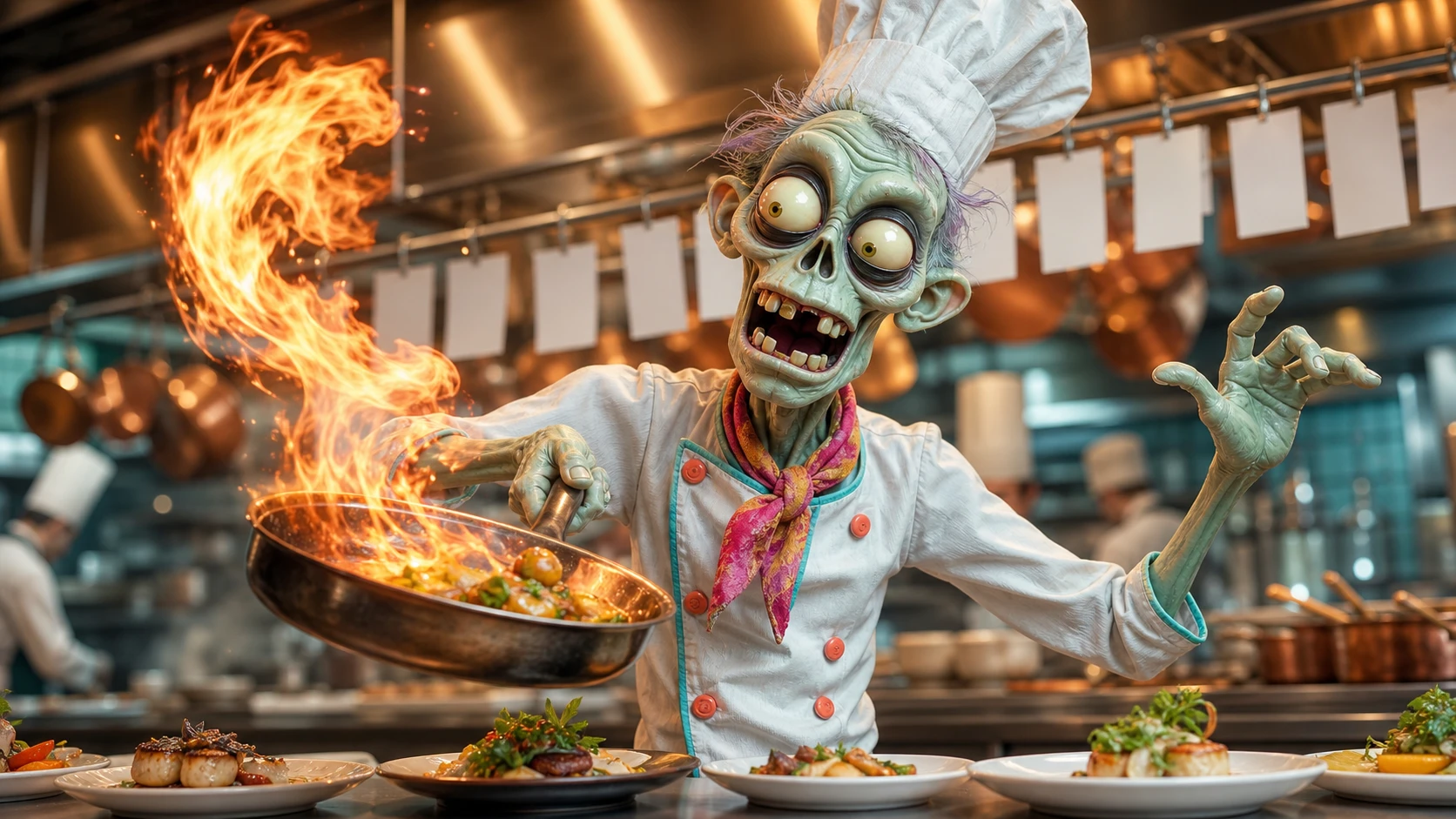
AI Integration For Jacksonville Restaurants
Owner or general manager of an independent restaurant, likely doubling as the host, the reservation line, and the social media manager. If that sounds familiar, the fix isn’t hiring another person to sit by the phone. It’s an AI system built into your site that never misses the call in the first place.
Why This Matters More In Jacksonville Than It Looks
Florida's minimum wage is on a legislated annual march to $15/hr by late 2026 (already $14.00/hr general, $10.98/hr tipped as of late 2025, rising again September 30, 2026), steadily raising front-of-house labor cost every year regardless of a restaurant's own decisions — while Jacksonville pulled over 8 million visitors in fiscal 2024 who spent $4.1 billion, with 'going out to eat' ranked the #1 thing those visitors did.
- Florida's minimum wage was $14.00/hr for non-tipped employees and $10.98/hr for tipped employees (tip credit $3.02/hr) effective September 30, 2025, with the next scheduled increase to $15.00/hr general and $11.98/hr tipped on September 30, 2026 (OnPay Florida minimum wage guide; remotelaws Florida wage guide).
- This is a fixed statutory schedule under Florida's constitutional minimum-wage amendment — restaurant labor costs rise automatically each year through 2026, independent of local market conditions.
- Florida law prohibits local jurisdictions, including Jacksonville, from setting a minimum wage above the state rate, so the entire metro is on the same statewide schedule.
- Jacksonville welcomed over 8 million visitors in fiscal year 2024, generating $7.4 billion in total economic impact (Visit Jacksonville / Downs & St. Germain Research survey of 2,700+ visitors).
- Visitors spent $4.1 billion directly on restaurants, attractions, shopping, entertainment and rental cars, and going out to eat was the single most common visitor activity, ahead of visiting friends/family and going to the beach (Visit Jacksonville research).
What Florida Actually Requires
Florida restaurants are regulated at the state level, not by a county health department -- the state's Division of Hotels and Restaurants (DBPR) issues permits, inspects on a risk-based schedule, and enforces food manager certification, while liquor licenses run through a strict county-population quota system.
- Restaurants in Jacksonville/Duval County are licensed and inspected by the Florida DBPR Division of Hotels and Restaurants, not a county health department -- Florida is one of the few states where restaurant regulation is centralized at the state agency level.
- DBPR uses a risk-based inspection frequency: Level 1 establishments get 1 unannounced inspection/year, Level 2 gets 2, Level 3 gets 3, and Level 4 (confirmed foodborne illness history) gets 4 per year; results are posted online but establishments are not letter-graded.
- Florida law (Section 509.039, F.S. and Rule 61C-4.023, F.A.C.) requires food managers to complete certification within 30 days of employment, and at least one Certified Food Protection Manager must be present whenever 4 or more employees are handling food; certificates are valid 5 years.
- A full liquor license (4COP) in Florida is quota-limited by county population and awarded via an annual DBPR lottery -- 63 quota licenses were available across 30 counties in the 2026 entry period statewide.
- Restaurants can bypass the liquor quota via a 4COP-SFS 'special license' if they maintain at least 2,000 sq ft of service area, seat 120+ people, and derive at least 51% of gross revenue from food and non-alcoholic beverages; a 2COP beer/wine-only license is not subject to the quota at all.
What’s Actually Costing You Right Now
What We Build
Ad Zombies is a branding and marketing company founded by Ken “Spanky” Moskowitz — 40 years in advertising, 10 Super Bowl ads, $460 billion in client revenue generated. Web Reanimation is our website rebuild service; AI integration is one of the ways we build it to keep working after the site launches, not just look good on launch day.
How Much Does This Cost?
AI integration isn’t a separate line item bolted onto a website quote. Web Reanimation projects start at $10,000, and AI chat, booking, and automation are scoped into that same fixed-price proposal based on what your business actually needs. You get one proposal, not a website quote and a separate AI vendor quote to reconcile.
How It Works
AI Integration In Nearby Markets
The local pressure that makes this worth building looks different in every market. Others we build for:
Want the full website picture for Jacksonville first? See Restaurant website design in Jacksonville. Not in Jacksonville, or not in restaurant? See AI integration for restaurants for our other markets, or every industry we build for.
Frequently Asked Questions
Part of it. AI chat, AI-powered booking, and marketing automation are capabilities we build into your Web Reanimation site -- not a second contract, a second price, or a second vendor to coordinate. Web Reanimation projects start at $10,000, and AI integration is scoped into that same fixed-price proposal.
Fair question. What makes AI integration worth building at all is local: Florida's minimum wage is on a legislated annual march to $15/hr by late 2026 (already $14.00/hr general, $10.98/hr tipped as of late 2025, rising again September 30, 2026), steadily raising front-of-house labor cost every year regardless of a restaurant's own decisions — while Jacksonville pulled over 8 million visitors in fiscal 2024 who spent $4.1 billion, with 'going out to eat' ranked the #1 thing those visitors did. That's the real pressure an AI assistant or automated booking flow is built to relieve here, not a generic feature list.
You own the build -- the code, the content, the domain, and access to your CMS. The AI assistant itself runs on usage-based provider costs (the same way any AI tool works), but there is no markup, no "hostage fee," and no platform lock-in on our end.
Most Web Reanimation projects, AI integration included, take 6 to 12 weeks from kickoff to launch. We accept a maximum of 5 Web Reanimation projects per month across every industry we work with, so timelines are real, not padded.