
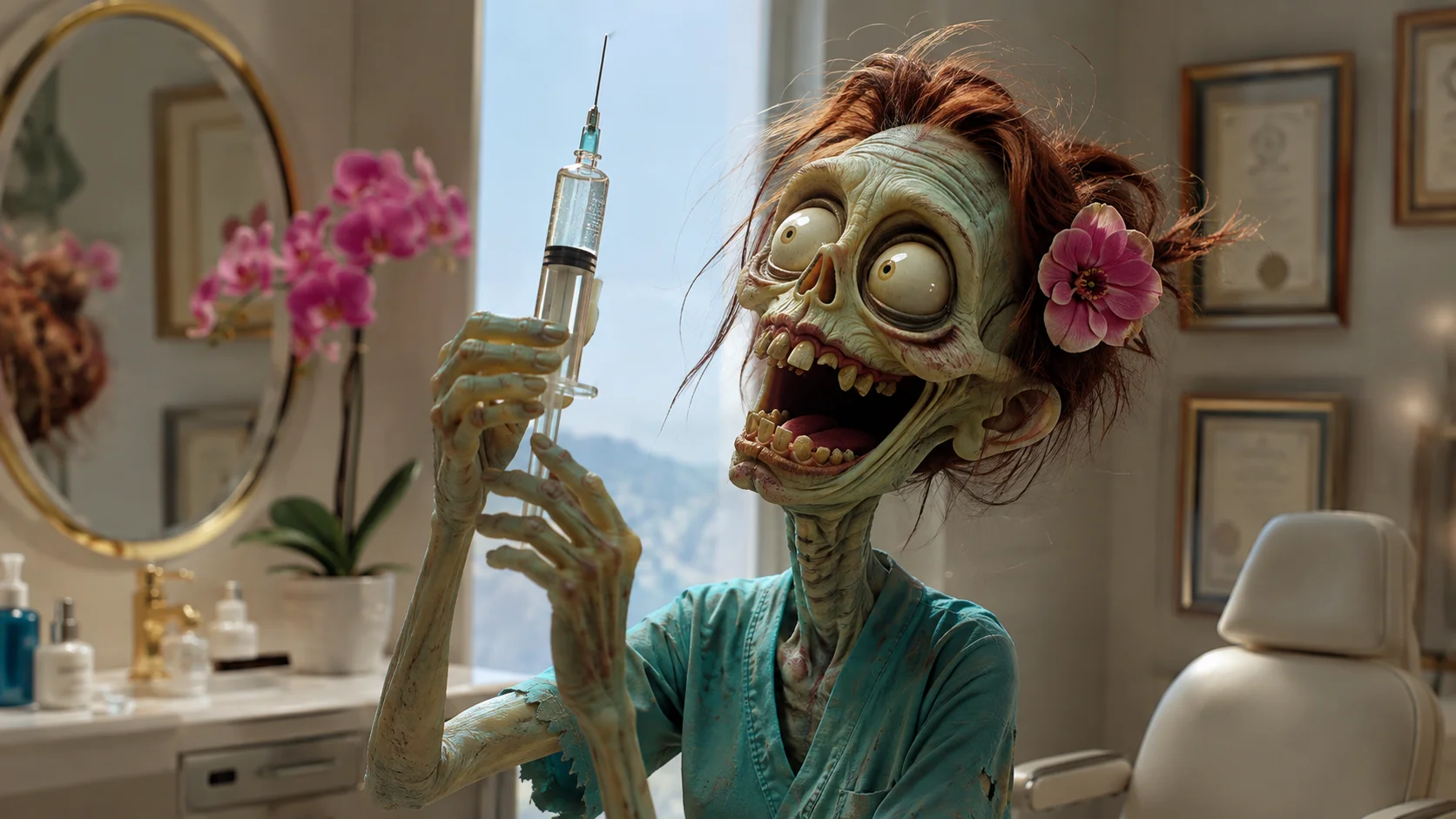
Plastic Surgery Website Design For Philadelphia, Pennsylvania
Philadelphia's cosmetic-surgery patient base splits sharply along geography: the city's own median household income trails the national figure, but the Main Line suburbs feeding into it (Gladwyne, Villanova, Bryn Mawr) rank among the wealthiest ZIP codes in the entire country, with Villanova's median household income topping $200,000 and Gladwyne's average adjusted gross income around $957,200.
You’ve probably seen the generic version of this page before — the one that says “serving Philadelphia and the surrounding area” a dozen times and calls it local. That’s not what this is. Ad Zombies builds websites for plastic surgery practices built around how Philadelphia’s market actually works, not a template with the city name dropped in.
Why Philadelphia Is Different For Plastic Surgery Practices
Philadelphia's cosmetic-surgery patient base splits sharply along geography: the city's own median household income trails the national figure, but the Main Line suburbs feeding into it (Gladwyne, Villanova, Bryn Mawr) rank among the wealthiest ZIP codes in the entire country, with Villanova's median household income topping $200,000 and Gladwyne's average adjusted gross income around $957,200.
- Chester, Montgomery, and Bucks Counties are the three highest-income counties in Pennsylvania (median household incomes of roughly $104,161, $93,518, and $93,181 respectively as of 2020 Census data), all within easy driving distance of Center City Philadelphia practices.
- Gladwyne's 19035 ZIP code has ranked among the wealthiest ZIP codes nationally (Bloomberg ranking, #6) and has Pennsylvania's most expensive residential real estate by median listing price.
- Philadelphia is home to multiple academic plastic surgery training programs, including the University of Pennsylvania's program (131+ residents trained since 1957, nationally recognized in autologous breast reconstruction and microsurgery under Dr. Joseph Serletti) and Temple University's Plastic & Reconstructive Surgery fellowship, which rotates fellows through Temple University Hospital, Fox Chase Cancer Center, St. Luke's, Abington-Jefferson Health, and Geisinger.
- Penn's plastic surgery division at Children's Hospital of Philadelphia (CHOP) has a long-established pediatric/craniofacial subspecialty, giving the metro a distinctive academic-medicine credibility angle beyond generic 'teaching hospital' claims.
- The metro area's population grew for two consecutive years (2024 and 2025) after pandemic-era declines, though 2025 growth slowed as international migration into the region fell from over 52,600 (2023-24) to about 18,100 (2024-25).
Built Around Pennsylvania’s Rules, Not Guesswork
Pennsylvania has no cosmetic-injectable-specific statute; Botox, fillers, and similar procedures fall under the state Medical Practice Act's general physician-delegation rules, and medspas must be physician-owned under Pennsylvania's Corporate Practice of Medicine doctrine.
- Under Section 54.5(d) of the Medical Practice Act, only physicians licensed to practice medicine in all its branches may delegate injectable/cosmetic tasks to licensed and unlicensed personnel — there is no injectables-specific carve-out in PA law.
- Only physicians, physician assistants, nurse practitioners, and registered nurses acting under physician delegation may legally administer Botox and dermal fillers in Pennsylvania; estheticians and unlicensed medical assistants cannot inject in any U.S. state, including PA.
- Pennsylvania medspas must be owned by a licensed physician (Corporate Practice of Medicine doctrine); non-physicians can only participate via a Management Services Organization (MSO) structure handling non-medical business operations.
- A Pennsylvania-licensed physician (MD or DO) must serve as medical director with documented, real clinical oversight — written protocols, competency validation, and quality-assurance processes are required for injectables, energy-based devices, IV therapy, and weight-loss services.
- A physician, PA, or APRN must personally conduct an initial in-person 'good faith' physical assessment of each patient before any cosmetic procedure is performed.
What We Build For Philadelphia Plastic Surgery Practices
Ad Zombies is a branding and marketing company founded by Ken “Spanky” Moskowitz — 40 years in advertising, 10 Super Bowl ads, $460 billion in client revenue generated. Web Reanimation is our website rebuild service: fast, fully owned, built for practices whose patients are doing real research before they call.
How It Works
Procedure Pages For Philadelphia
Beyond this general practice page, we also build dedicated pages for the specific procedures patients in Philadelphia search for:
Not in Philadelphia? See plastic surgery website design for our other markets, or website design for home service businesses for our other industries.
Frequently Asked Questions
Fair question — most "location pages" are exactly that. Ad Zombies works with practices remotely, wherever they are, so we're not claiming a Philadelphia office we don't have. What we do build is a site scoped around your actual patient base and Philadelphia's actual market: Philadelphia's cosmetic-surgery patient base splits sharply along geography: the city's own median household income trails the national figure, but the Main Line suburbs feeding into it (Gladwyne, Villanova, Bryn Mawr) rank among the wealthiest ZIP codes in the entire country, with Villanova's median household income topping $200,000 and Gladwyne's average adjusted gross income around $957,200.
The same as anywhere: Web Reanimation projects start at $10,000, scoped to your procedures and patient volume. You get a fixed-price proposal after a free assessment, not a vague estimate.
You own everything — the code, the content, the domain, and access to your CMS. No monthly "hostage fees," no platform lock-in.
Most Web Reanimation projects take 6 to 12 weeks from kickoff to launch. We accept a maximum of 5 Web Reanimation projects per month across every industry we work with, so timelines are real, not padded to make room for everyone who calls.